This is a heading
This is a subheading 123
this is some text which will go here
This news article is more than 12 months old and some of the information may be out of date - please see our latest news articles here.
The NRLA’s final consultation of 2023 asked landlords to comment on their experiences of using guaranteed rental schemes – often called Rent-to-Rent agreements.
This blog post reports some findings from the study – what attracts landlords to such schemes, how many landlords participate in such schemes…and what the pitfalls are.
Rent to Rent is an alternative property letting model to the more usual (landlords managing property either themselves or through use of a letting agent) approaches to renting.
A rent-to-rent agreement is an attempt to mitigate the increasing uncertainties involved in renting. A landlord lets property to a third-party intermediary rather than directly to tenants. These third parties (rent-to-rent operators, or sub-landlord) guarantee a rental income to the landlord, irrespective of whether a property is inhabited, or a tenant accrues arrears. There are several types of rent-to-rent operator (or sub-landlord), ranging from a local authority long-leasing scheme to a short-term let company.
Whilst these arrangements can work for all where a rent-to-rent operator acts lawfully and manages the tenancy properly, they can be open to rogue operators.
Here the third party – who effectively sub-lets the property – has no material interest in the property and so may try and avoid legal obligations. Rent-to-rent operators can simply ‘shut-up shop’ when faced with enforcement action.
The NRLA consultation asked landlords whether they employed Rent to Rent for their properties:
When comparing those who use this model with other landlords:
Under a rent-to-rent agreement the rent levels charged to a tenant has nothing to do with the property owner/leaseholder.
Chart 1 below sets out the reasons why landlords have adopted this approach to renting property. With so few landlords in the sample with experience in this topic, smaller percentages may be misleading. As a result, actual percentages are not quoted, but the bars on the chart are representative of the responses.
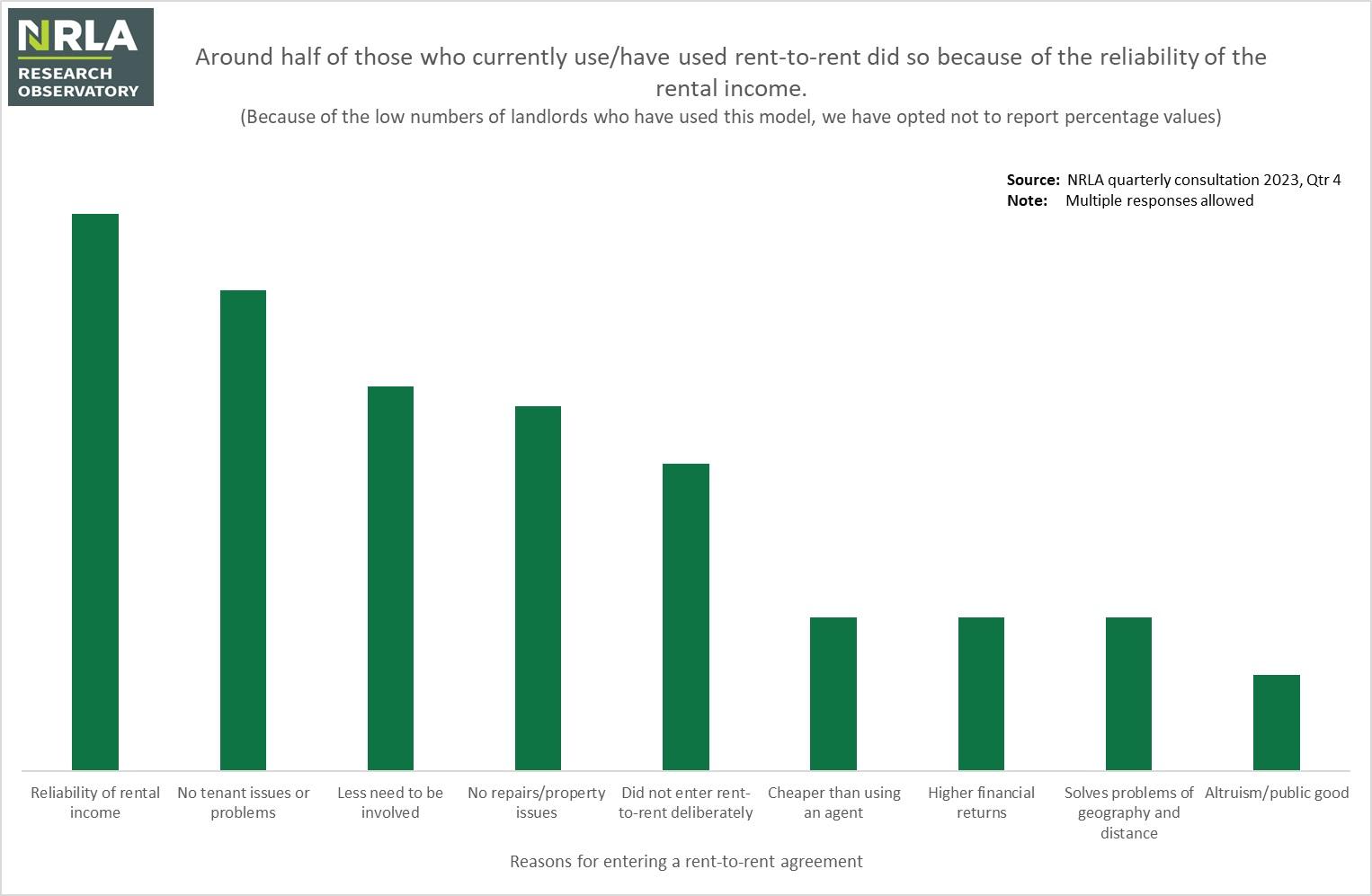
In the chart above the largest bar – reliability of rental income – represents around 40% of responses. The decision to enter a rent to rent agreement would seem to be essentially one of trade-offs:
Guaranteed rental income Vs possible higher rents
Reduced property/tenant headaches Vs overall profitability
Overcoming geographic barriers Vs letting agent costs
Chart 2 below shows some of the difficulties members have experienced through these agreements. Again, the percentages have been removed:
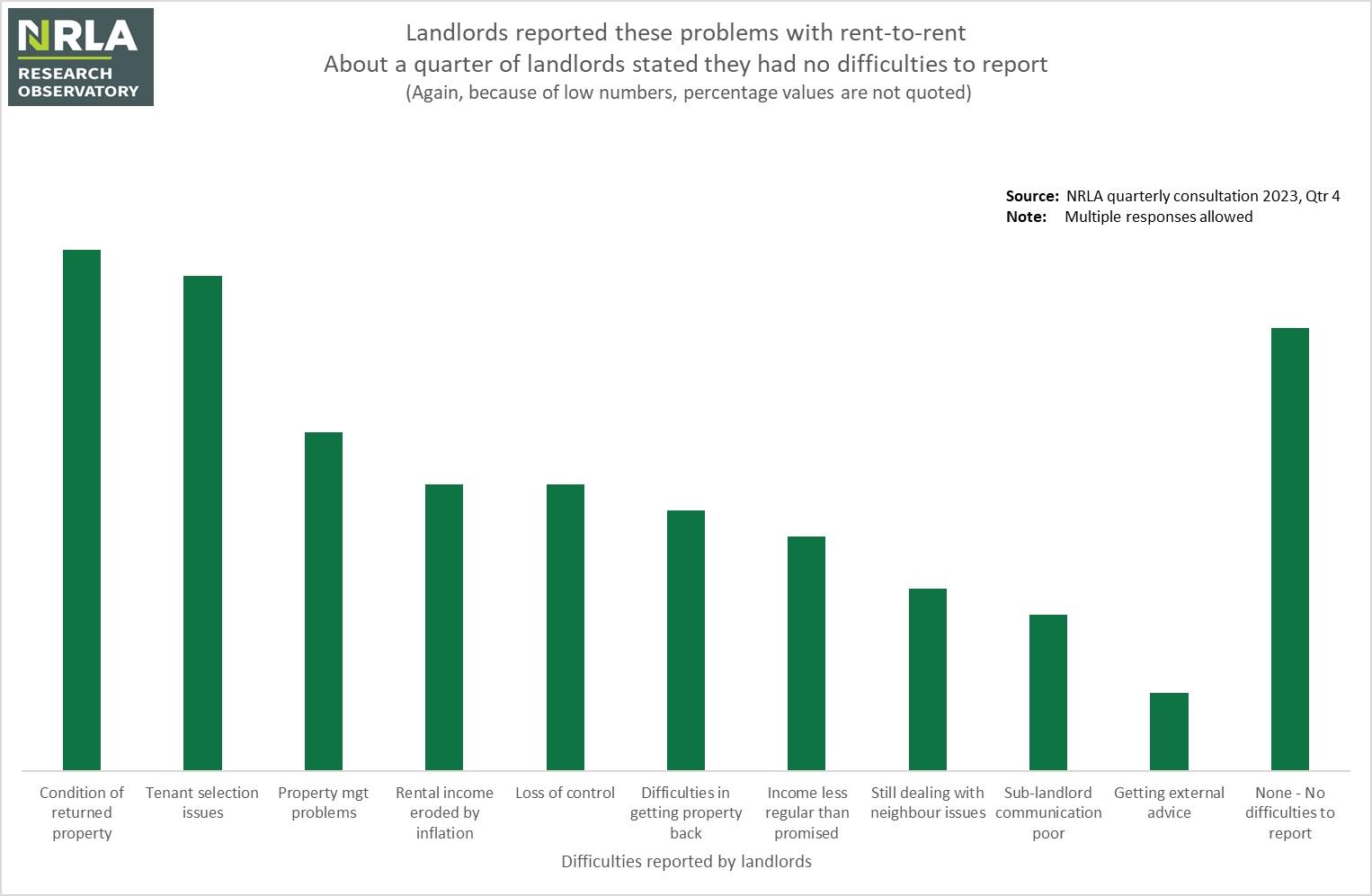
Only around one-quarter of landlords stated they had “not experienced difficulties” when using this model. For most members however, the following observations emerged:
Our consultation asked landlords about their experience. From those who responded they “not experienced difficulties”, the following comments are a fair reflection:
“I would recommend but only to a trusted company”
“A lot depends on the operator you work with”
“It is OK as a small percentage of a portfolio”
For those (the majority) who had experienced difficulties, there were many cautionary comments, the following being typical:
“It [taking part in rent-to-rent] was the worst decision we ever made as a business”
What emerges from the comments – both positive and negative - is the need to ensure that the following are fully factored into a rent-to-rent arrangement:
From the comments, it is clear recent inflation and well documented surge in tenant demand have not suited many of the landlords who have adopted this model. The risk [management]-return balance has undoubtedly altered for many landlords.
The Renters (Reform) Bill – which at the time of writing is awaiting its Third Reading in the Commons – may further disrupt this model, with proposed changes to fixed term tenancies bringing further uncertainty and a shift in the risk profile.
However changing variables such as inflation and tenant demand are not the only risk factors. Landlords can be open to poor, if not illegal, practices by rent-to-rent operators.
The NRLA have already submitted members’ experiences in sperate consultations run by National Trading Standards (NTSELAT) and the House of Lords Industry and Regulators Committee inquiry into the regulation of property agents.
The key messages from the consultation would be for landlords to (i) remember market circumstances do change and (ii) obtain legal advice to understand the full implications of any agreement.