This is a heading
This is a subheading 123
this is some text which will go here
This news article is more than 12 months old and some of the information may be out of date - please see our latest news articles here.
The NRLA undertake four quarterly consultations each year. Because these consultations follow broad themes, the NRLA is able to highlight trends and changes in the PRS.
One trend among landlords which these consultations have highlighted has been the growth in popularity among landlords creating a limited company to hold property – often called “incorporation”. Typically, landlords declare property income, allowances and then pay tax via self-assessment (in the same way as millions of self-employed individuals do). However what has hitherto been a growing minority of landlords, opt to use limited company status - via a Special-Purpose Vehicle (SPV) – to own and manage property.
This blog post looks at our most recent findings on the topic and tries to understand what the most recent data tells us about the supply side of the PRS.
Obviously, landlords should not use this post as guidance on their individual tax status, but the well documented potential advantages of using a limited-company SPV to hold property include:
On the downside, incorporation involves much more administration and compliance. The tax implications and calculations when incorporated can also be more complex. Accessing BTL finance can also be trickier for incorporated vehicles than for landlords operating as sole traders.
However more than two-thirds (68%) of those landlords who do have limited company status believe this approach has been “beneficial to their business”. This by far outweighs just 7% of landlords who believed adopting limited company status had been detrimental to their business.
The NRLA regularly ask landlords about how they run and organise their portfolios. Chart 1 below shows the proportion of landlords who use various approaches:
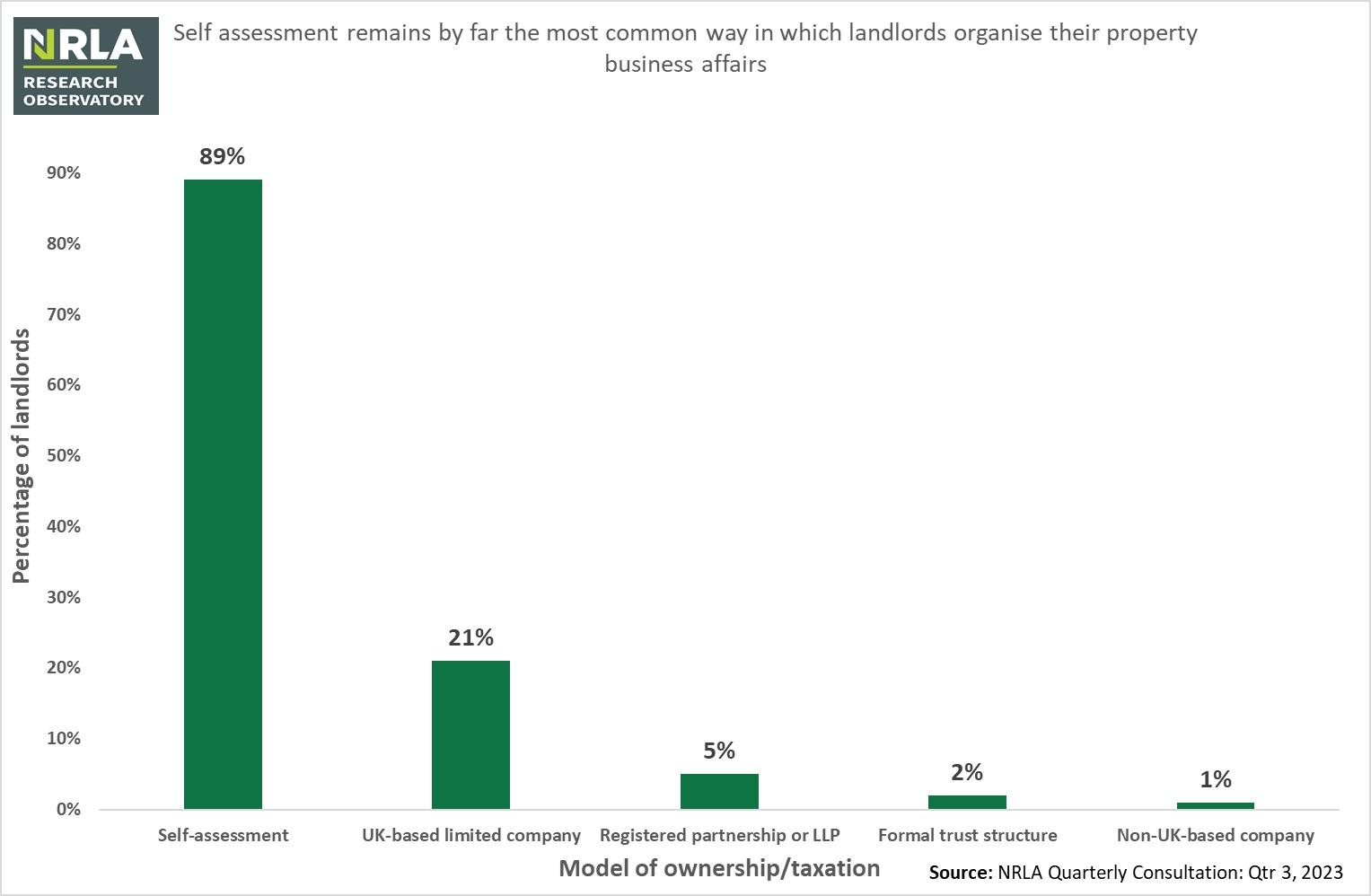
Chart 1 shows two forms of organisation dominate – self assessment (by which we mean self-employment, using self-assessment to calculate property income) and private limited company status. Use of the other listed methods are too infrequent to undertake any meaningful analysis.
Many landlords have property organised in both of the two main groups:
Closer analysis of the data shows that:
Looking at the same data from the perspective of landlords who use limited company status:
Meanwhile:
Put simply, self-assessment remains the dominant form of landlord business organisation. That said, there is a group of landlords who do not use self-assessment at all.
There is no statistically valid difference in confidence levels (although they are slightly higher among those landlords who have at least some of their portfolio held in limited companies). However, we know from the consultation that those landlords who have limited companies:
Thus, landlords who use limited companies were:
Whilst those landlords who operate at least partially through specific limited company vehicles have distinct characteristics, is the use of limited company vehicles indicative of a trend in the PRS?
Chart 2 below shows how the proportion of landlords who use limited companies have changed since the NRLA was formed in 2020:
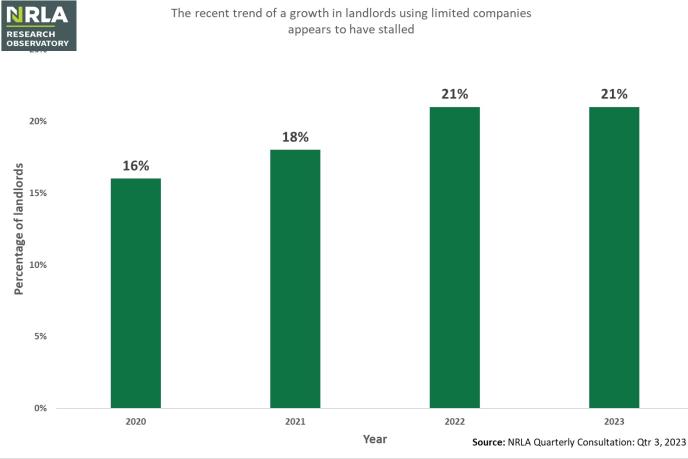
The chart shows a steady growth in the proportion of NRLA members using limited company status since 2020 – until this year, when growth stalled. Analysis by Hamptons indicates there has been growth in the use of incorporation during 2023. They identify the growth as being most notable: (i) among single property landlords and (ii) among landlords with more than 20 properties.
If limited company status is as beneficial, and is growing in the landlord market, why would there not be continued growth among NRLA members?
Data from the Bank of England is showing new Buy-to-Let loans falling rapidly. The NRLA's Landlord Confidence Index confirms that the proportion of landlords purchasing property in the last twelve months – just 8% overall – is lower than at any time during the pandemic.
Transferring properties into a limited company can incur tax liabilities and so become expensive for all but the most recently bought properties. Hamptons research emphasises new market entrants.
For existing landlords, reasons (1) & (2) are coming together in an unfavourable way at the moment. This means further increases in the proportion of current landlords taking up limited company status may need to wait for confidence to be restored.
The relative tax-based benefits between self-assessment and limited company ownership shift continually. Even during these last few years, there have been changes to dividend tax allowances; Capital Gains Tax (CGT) rules as well as Corporation Tax rates and bands. Manufacturing trade organisation Make-UK noted in February that there have been twenty-six changes to Corporation Tax since 2019. There have also been changes to the UK tax regimes which impact upon the relative advantages of offering residential or short-term property holdings.
Both the changes themselves, and the uncertainty of prospective future changes alter the dynamic between self-assessment and limited company status. They also increase the risk of investment.
Reasons (2) & (3) become somewhat less relevant for larger landlords, where transaction costs can be more easily absorbed.
NRLA research shows that - until the most recent year - an increasing proportion of member landlords had been using limited company status as a model of portfolio ownership and control.
Given most landlords who operate limited companies find them beneficial it is perhaps surprising their growth among members has stalled.
However, when set against other data the NRLA collect, it could be the proportion of members operating limited companies has become more an indicator of landlord confidence, and not an enabler of portfolio growth. This is not necessarily the case for new entrants or landlords with larger portfolios.
For confidence and investment to return, it would seem micro-economic stability - here referring to sector-level tax changes - as well as macro-economic stability is a pre-requisite.