This is a heading
This is a subheading 123
this is some text which will go here
This news article is more than 12 months old and some of the information may be out of date - please see our latest news articles here.
Just after the fieldwork for the first Landlord Eye closed, the Government opened a consultation on reforms to Minimum Energy Efficiency Standards (MEES). One key proposal in that consultation is to change EPC assessments to a ‘fabric first’ model: This proposed change in the consultation places greater emphasis on insulation, double glazing, and other structural upgrades.
The NRLA’s latest Landlord Eye survey provides some insight on the scale of investment landlords are making in improving insulation. Landlord Eye also reports on the experiences of landlords with the Great British Insulation Scheme (GBIS).
But with patchy awareness and mixed experiences of GBIS, the question remains: is there sufficient support for landlords to make these improvements?
The NRLA believe that Renters’ Rights Bill (RRB) will deliver the most significant reforms to the private rented sector since 1989. Landlords are concerned about the scope of the changes the Act - once passed - will introduce.
That said, landlord views about the different elements and components of the Bill do differ. The NRLA asked landlords to outline, in their own words, what is currently shaping their outlook on the sector. The NRLA then collected, anonymised, and analysed these views using a specialised AI tool:
The NRLA anticipate that, with government consultation on MEES now underway, landlord concern and anxiety over necessary investment levels will continue to rise.
Many landlords have already invested in improving the energy performance of their properties. Most recently (in research for Landlord Eye), the NRLA asked landlords to focus only on their recent investment in insulation – rather than measures such as boilers or heat pumps:
Among those who have made insulation improvements, double/triple glazing, and loft insulation were the most common items. Wall insulation, draft exclusion measures, and new flooring were also popular.
Most landlords (81%) who had made upgrades say they typically spent up to £5,000 per property. Almost one-in-five landlords (18%) had spent more than that:
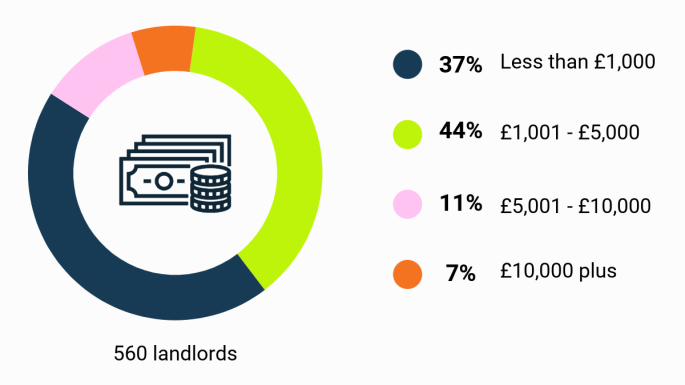
(Note: percentages are based on landlords who have made such investments in the last two years)
The Great British Insulation Scheme (GBIS) is a government-backed initiative designed to improve the energy efficiency of homes in Great Britain, particularly those with lower energy performance ratings, focussing solely on insulation upgrades.
The NRLA asked landlords who currently have properties below EPC C about their engagement with the GBIS scheme. When asked by the NRLA, most landlords (58%) who currently have properties below EPC C had never heard of GBIS. Only 42% had some awareness but had not necessarily engaged with it.
Of those who were aware of GBIS (185 landlords):
The graphic below shows the success of landlords who have applied for the scheme (according to the results of the research in Landlord Eye #01).
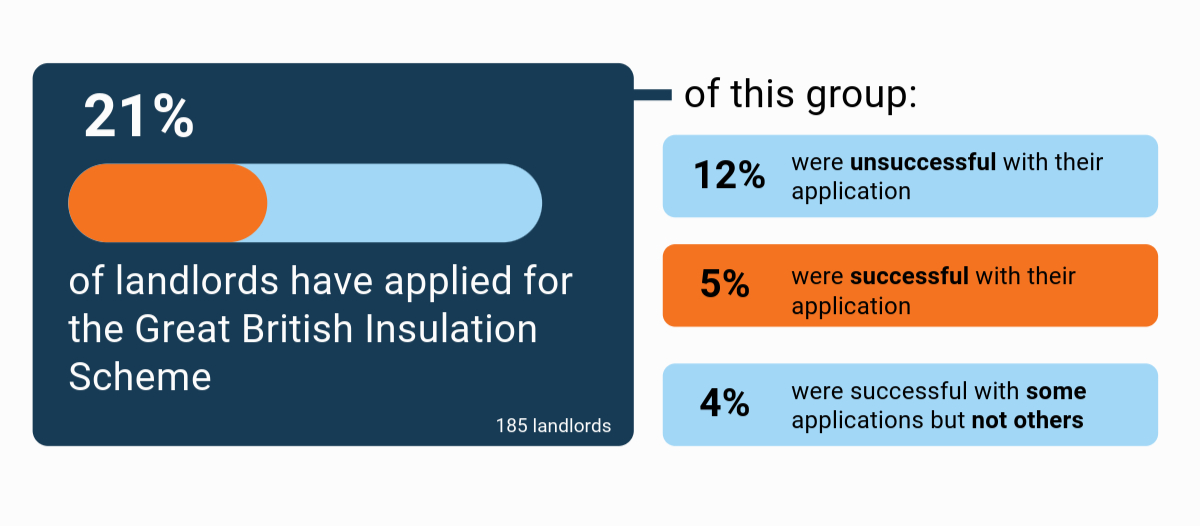
The NRLA asked landlords who have applied for a grant under the GBIS scheme for their views. Again, the NRLA have assessed comments using AI:
Many landlords for example reported one or more of the following:
Among landlords there is a clear ambition to improve energy efficiency: When the NRLA asked landlords for their thoughts on energy efficiency and the role grants play in helping the sector achieve EPC-C, several common themes emerged:
Many landlords stressed the need for clear government guidance first - particularly around updated EPC definitions, specific necessary upgrades and – for grant applications – consistent eligibility criteria.
Landlords wished to see the government make grants available across the PRS, not restricted by tenant income or benefit status.
Landlords welcomed the idea of a fast-track option for straightforward upgrades like loft insulation and double glazing to encourage uptake and maximise early impact.
A common pain point among landlords was the lack of consistent advice on solid and external wall insulation: Landlords reported mixed messaging and uncertainty around best practices.
Even with grants, many landlords flagged that upgrading older properties to required standards remains financially unviable without significant support.
Landlords are willing to play their part in improving energy efficiency, but require clear guidance, financial support, and realistic timelines to do so effectively.
Low awareness of GBIS, confusing eligibility rules, and inconsistent delivery are however holding back progress. The government need to realise that reaching EPC-C will not happen without a solid support infrastructure in place. This means the government need to recognise the scale of the task and put in place (i) practical support, (ii) realistic timelines, and (iii) funding that works.
The NRLA continues to advocate for policies that contribute to providing this infrastructure. The aim of policy makers should be to ensure the nation can meet energy efficiency goals without compromising the viability of the Private Rented Sector.