This is a heading
This is a subheading 123
this is some text which will go here
This news article is more than 12 months old and some of the information may be out of date - please see our latest news articles here.
The English Housing Survey (EHS) is a national survey conducted annually, providing data and insights into the condition of housing in England. It covers a wide range of topics including: the quality and safety of housing; energy efficiency; the characteristics of households; housing tenure; and the physical condition of homes.
The survey combines over 11,000 interviews with householders with a similar number of housing inspections to collect detailed information on both housing and households. Note that Covid-19 has had an effect on data collection over the last few surveys, but not this one.
The EHS is an essential tool for government policy-making. It helps to identify housing trends; inform housing policies; and address issues of housing and living conditions. It is one of many sources monitored and quoted regularly by the NRLA.
At present the survey is commissioned by the Department for Levelling Up, Housing and Communities (DLUHC), though departmental ownership changes over time.
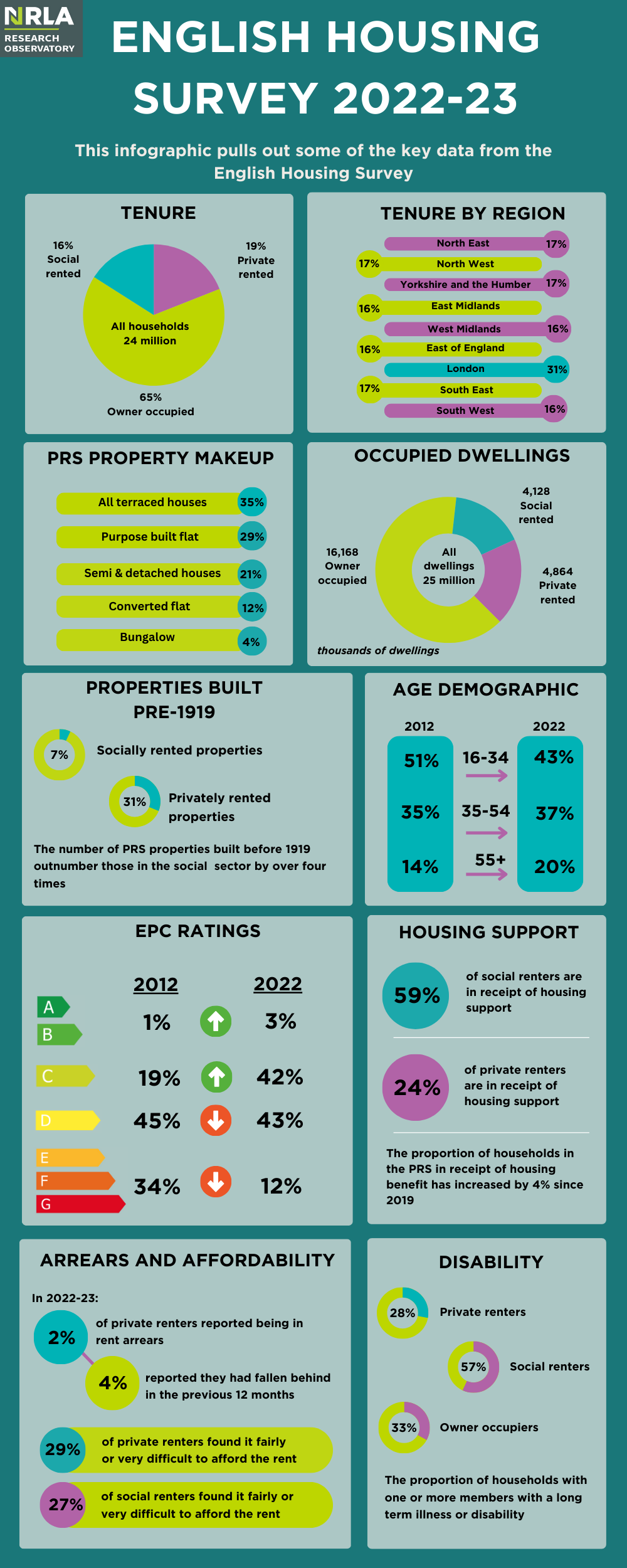
In England, owner-occupied homes continue to represent the majority of housing, encompassing 65% of all households, or approximately 15.6 million.
Across the regions, this proportion is fairly uniform. But London has a significantly higher proportion of households living in the PRS - 31%.
Older dwellings are among the least energy-efficient. These dwellings often require substantial investment to meet minimum energy efficiency standards.
The data shows landlords in the PRS have been investing heavily in energy efficiency measures:
The key challenge will be moving properties currently rated 'D' into a more energy efficient band.
The profile of tenants in the PRS is slowly but surely becoming more age-mixed, with the proportion of older tenants rising.
Whilst the proportion of tenants in arrears is low, a far higher proportion are finding it difficult to afford the rent.