This is a heading
This is a subheading 123
this is some text which will go here
This news article is more than 12 months old and some of the information may be out of date - please see our latest news articles here.
This blog explores the energy efficiency challenges faced by landlords in Wales, drawing on insights from Wave 3 of the Wales Longitudinal Study (WLS). You can find out more about the Wales Longitudinal Study and read the latest report here.
Participants were asked to share their perspectives on energy efficiency improvements, with a focus on identifying potential policies to encourage PRS investment.
Note: The views expressed in this study reflect those of participating landlords and do not necessarily represent the NRLA’s position
Since the study was conducted, the latest Government proposals – at the time of writing out for consultation - will require all rental properties to achieve a minimum EPC C rating by 2030. With this proposed deadline just five years away, the challenges landlords face – and their perspectives on potential interventions - are becoming more critical.
Landlords highlighted the challenges posed by Wales' housing stock, much of which is older and therefore, someway off the desired EPC C level. According to an ONS report (2022), property age is the most significant factor affecting energy efficiency. Unlike newer homes, many older properties require extensive and costly retrofitting to meet higher energy efficiency standards.
Data from the Valuation Office Agency underscores this issue:
Given the challenges of insulating and modernising older properties, new housebuilding plays a critical role in improving overall energy efficiency. However, as shown in the table below, housing construction in Wales lags behind England, further compounding the issue.
In Wales only 0.3% of homes being newly built compared to 0.6% in England. The following chart illustrates the number of properties rated E or below, further highlighting the challenge faced by landlords in Wales
One landlord highlighted the challenges of upgrading older properties, stating:
Other landlords expressed concerns about meeting new energy efficiency standards. They highlighted the need for policies that account for regional differences, providing targeted support to support landlords in Wales make the transition:
For example, one landlord commented:
Upgrading properties rated D or below often involves significant expenses, such as replacing old boilers with heat pumps or installing solar panels. Landlords expressed frustration at the lack of funding options or tax incentives to offset these costs.
One landlord questioned:
Landlords raised concerns about the lack of clear, accessible information on available grants and funding. Many felt there was no centralised resource to guide them through the process of accessing grants or understanding how to achieve target EPC ratings.
Comments included:
Others spoke about inconsistencies in Local Authority rules which makes it harder for landlords to navigate the system, increasing costs and delays.A landlord highlighted the disparity in Local Authority approaches:
Many called for the Welsh Government to issue standardised guidance to ensure all local authorities apply the same rules consistently.
Landlords also expressed uncertainty about whether costly upgrades would deliver the required EPC improvements. Landlords reported that different assessors gave varying advice, creating further confusion. This is reinforced by an NRLA survey which found that:
Without clear, tailored guidance, many felt they were gambling on expensive measures without assurance of meeting future standards.
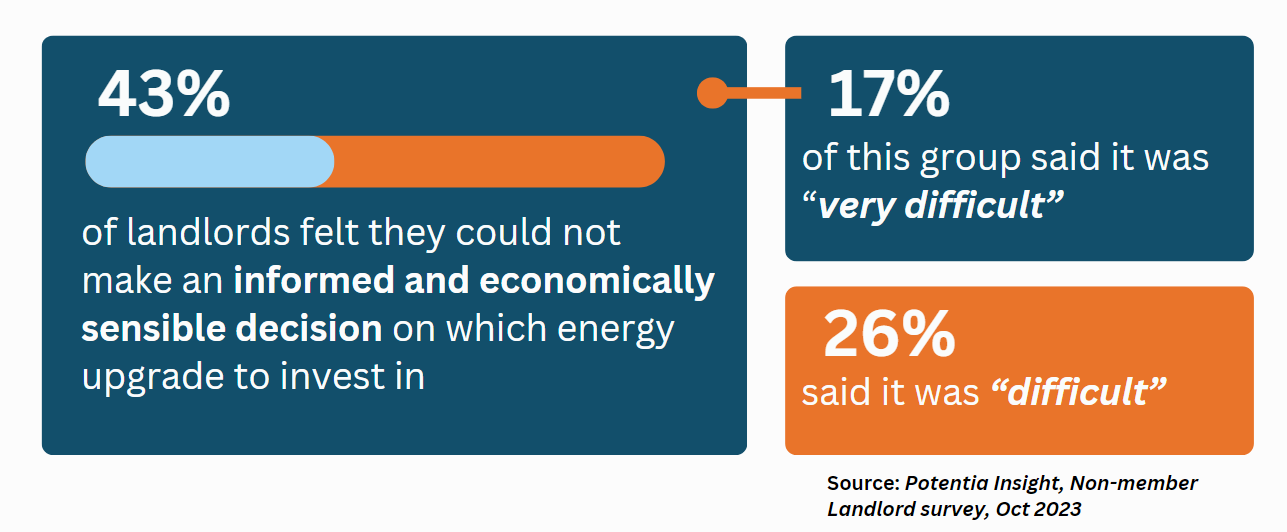
Landlords were asked to suggest non-grant interventions which would promote energy efficiency upgrades. There were many suggestions, the following were those proposals which were felt to have the greatest potential traction:
1. Tax relief for green investments – up to 100% tax relief on energy efficiency upgrades.
2. Deferred Capital Gains Tax (CGT) for green investments – encouraging landlords to invest in energy-efficient improvements.
3. VAT reduction on energy efficient materials – lowering the cost of sustainable upgrades.
Finally, to this list could be added a clear, Wales-focused, information portal:
4. A central hub for information – which would incorporate (i) standardised guidance across Wales and (ii) a single online platform for grant availability.
Insights from Wave 3 of the WLS highlight firstly, the urgent need for clearer guidance on energy efficiency measures and support. Secondly, landlords requested standardised Local Authority procedures. Both of these interventions are relatively costless and would provide a single pathway through the complexities of greening property retrospectively.
More ambitiously, targeted financial incentives – using the tax system - could unlock investment in energy efficiency.
The nature of Wales’s housing stock, and the limited success in building new homes in Wales, means that to ensure any, more rigorous EPC targets can be achieved, some form of intervention will be required.