This is a heading
This is a subheading 123
this is some text which will go here
This news article is more than 12 months old and some of the information may be out of date - please see our latest news articles here.
The private rented sector forms a significant part of the housing market, with 11 million people currently living in the sector. Over the last decade, the sector has undergone considerable changes with local authorities being the body in place to regulate and ensure landlords comply with legal obligations.
With that in mind, the NRLA sent out a series of freedom of information (FOIs) requests over the last few years asking a range of questions. Our latest series of FOIs - presented here - asks a range of questions which covered local authorities' approach to licensing, information gathering and inspections.
Each local authority was then ranked according to their answers. The full report is below, along with a complete authority-by-authority ranking.
While it is often claimed the PRS is under-regulated, the private rented sector is actually quite heavily regulated. There are around 170 separate pieces of legislation, covering hundreds of different responsibilities that landlords must follow when letting a house or a flat.
Typically these rules are enforced by the local authority. However, previous research by the NRLA has found evidence of a postcode lottery for enforcement. Local authorities have wide ranging powers to set their own enforcement strategies and priorities based on the local needs. However, previous research found that some local authorities make frequent use of their powers, but many others do not use their existing enforcement powers to address the small minority of criminal landlords. This suggests that problems in the PRS are not because of under-regulation so much as under-enforcement by some local authorities.
Why some local authorities make better use of their enforcement powers is a difficult question to answer. Largely because there is currently no requirement to share the results of enforcement strategies. As a result, it is difficult to identify using publically available data, which local authority enforcement strategies are effective.
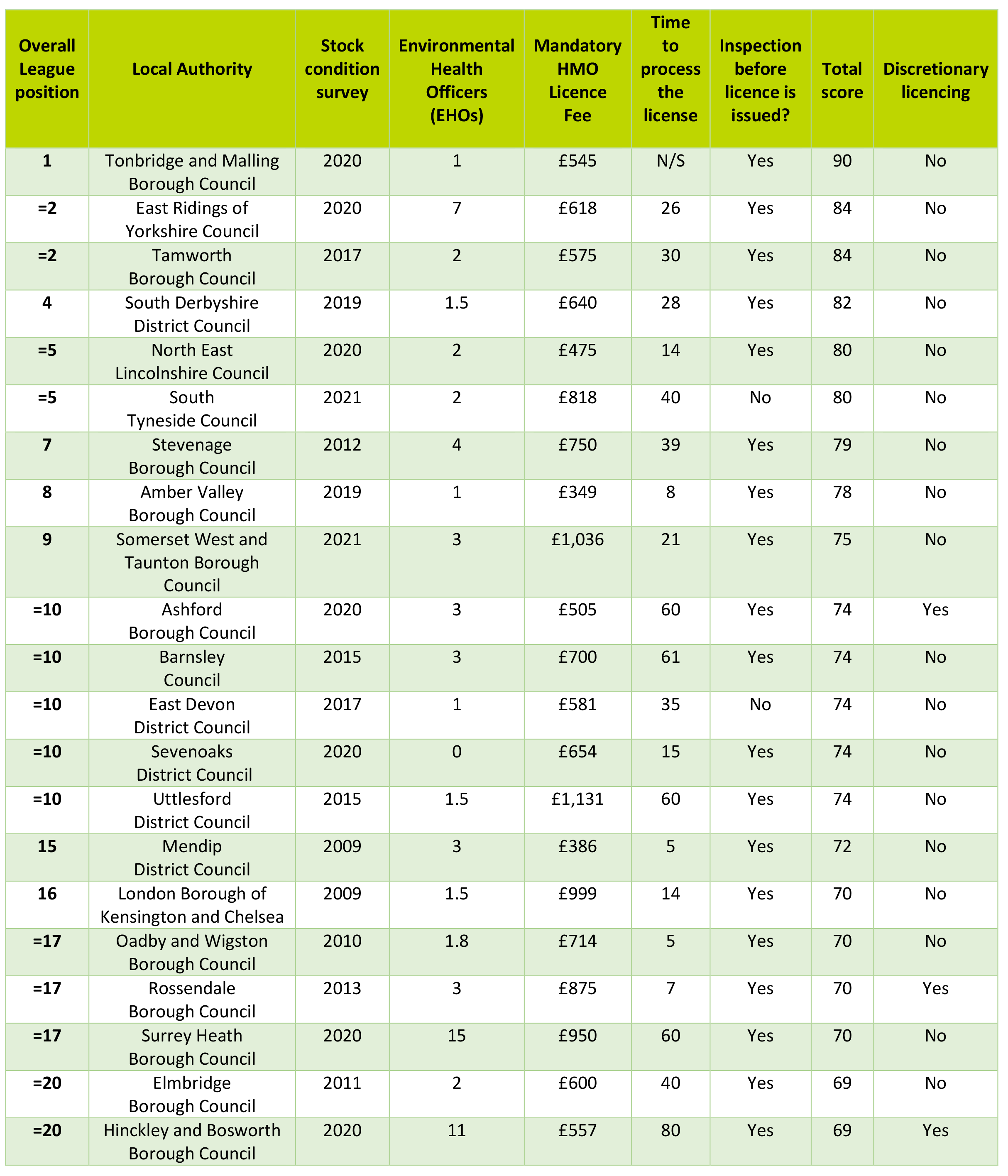
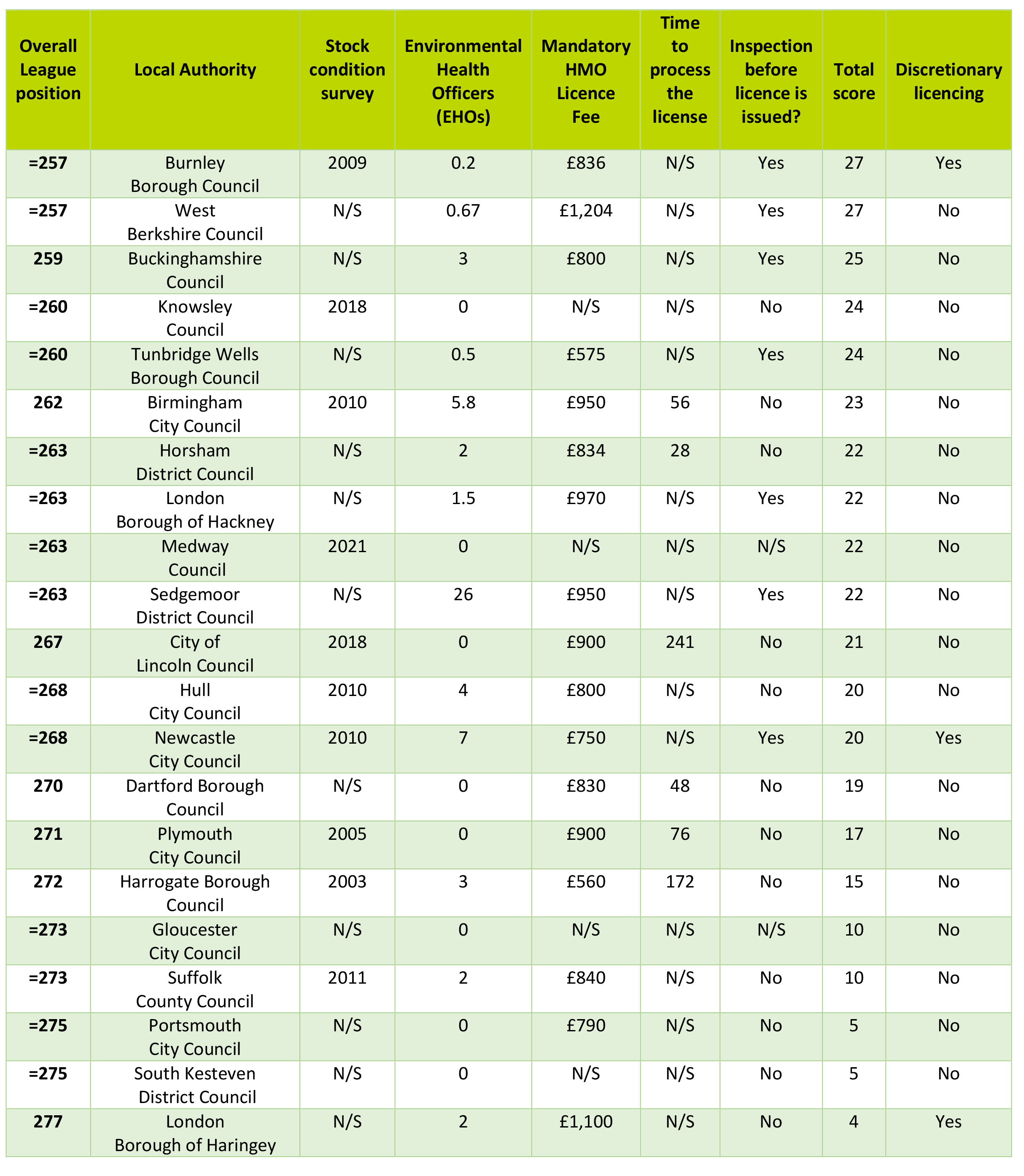
The following link to regional league tables and provide a rank for each local authority who participated in the study. Please select the region or local authority in which you are interested:
The data presented in the index tables is principally based on a series of freedom of information requests sent to 308 local authorities.
This freedom of information request asked local authorities to provide information on the following:
These questions were designed to assess the local authorities’ capacity to enforce and inspect, the accuracy of their information on the PRS, and the efficiency of their mandatory licensing scheme.
The information provided was then used to rank the overall performance of each respondent local authority and allocate them a place in the enforcement index.
A scoring metric was created to grade responses from local authorities:
| PRS Housing Units | Matrix Score |
|---|---|
| 0-2500= | 20 points |
| 2500-5000= | 14 points |
| 5000-10,000= | 10 points |
| 10,000-15,000= | 5 points |
| 15,000-30,000= | 2 points |
| 30,000+ | 0 points |
| Stock Condition Survey Years | Matrix Score |
|---|---|
| 2020+ | 20 points |
| 2017-2019= | 14 points |
| 2014-2016= | 10 points |
| 2010-2013= | 5 points |
| 2005-2009= | 2 points |
| Prior to 2005 | 0 points |
| Mandatory Licensing Cost | Matrix Score |
|---|---|
| <£100 & >£300 | 20 points |
| <£300 & >£500 | 14 points |
| <£500 & >£700 | 10 points |
| <£700 & >£900 | 5 points |
| <£900 & >£1500 | 2 points |
| £1500+ | 0 points |
| Mandatory Licensing Processing Time | Matrix Score |
|---|---|
| 22-44 working days | 20 points |
| 44-66 working days | 14 points |
| 66-132 working days | 10 points |
| 132-198 working days | 5 points |
| 198-264 working days | 2 points |
| 264 working days+ | 0 points |
| Mandatory Licensing Inspection Policy | Matrix Score |
|---|---|
| Yes | 20 points |
| No | 0 points |